
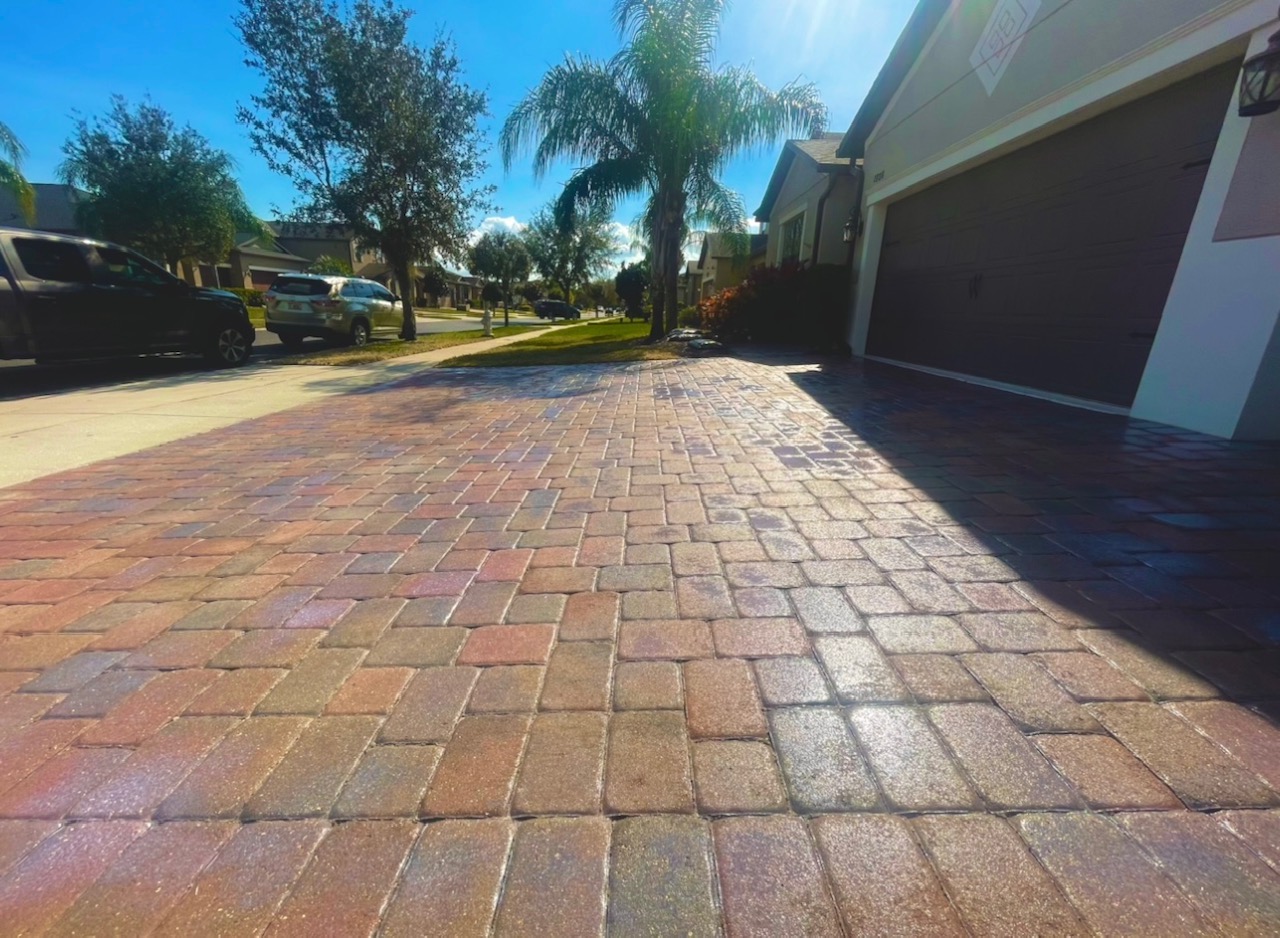
Paver sealing is one of the most effective ways to protect and preserve exterior surfaces in Florida. Driveways, patios, pool decks, and walkways made from brick, concrete, travertine, or natural stone require proper maintenance to stay vibrant and structurally sound. Without sealing, pavers quickly fade, lose sand, shift, and become vulnerable to weathering and organic growth.
In communities such as Wesley Chapel, Lutz, Land O’ Lakes, and Tampa Bay, paver sealing plays a major role in maintaining curb appeal and long-term surface durability.
Why Pavers Deteriorate Quickly in Florida
Florida’s climate is harsh on hardscapes. Several environmental factors contribute to paver wear:
-
Intense UV exposure
-
Frequent rain and moisture
-
Algae and mildew growth
-
Irrigation overspray
-
Heavy traffic
-
Sand erosion from water runoff
Without protection, these factors lead to:
-
Fading colors
-
Weed growth in joints
-
Ant beds forming beneath pavers
-
Sand washout
-
Uneven surfaces
-
Stains and discoloration
Paver sealing combats all of these issues and preserves the integrity of the surface.
Benefits of Professional Paver Sealing
Color Enhancement
Sealed pavers appear richer, newer, and more vibrant. Sealing restores faded surfaces and prevents future discoloration.
UV & Weather Protection
A quality sealer protects pavers from sun exposure and moisture penetration that can cause long-term damage.
Joint Sand Stabilization
Sealing locks sand in place, preventing washout and reducing weed and ant activity.
Stain Resistance
Oil, rust, dirt, and organic material no longer penetrate sealed surfaces, making cleanup easier.
Extended Longevity
Proper maintenance reduces the need for costly paver repairs or replacements.
The Paver Sealing Process Explained
A professional paver sealing service follows a structured, multi-step process:
1. Deep Cleaning
Pavers are pressure washed using controlled pressure to remove embedded dirt, algae, and surface buildup.
2. Joint Sanding
Kiln-dried or polymeric sand is applied to stabilize joints and create a uniform surface.
3. Sealer Application
A commercial-grade sealer is applied evenly to enhance color and protect the surface.
4. Curing
Sealer must cure for several hours or days depending on the product used.
Which Paver Types Can Be Sealed?
Common surfaces include:
-
Concrete pavers
-
Brick pavers
-
Travertine
-
Limestone
-
Marble pavers
-
Pool deck pavers
-
Driveway pavers
Each material requires specific cleaning pressures and sealer types.
How Often Should Pavers Be Sealed in Florida?
Most Florida properties require sealing every 2–4 years, depending on:
-
Sun exposure
-
Foot or vehicle traffic
-
Irrigation patterns
-
Weather conditions
-
Previous maintenance
Areas We Serve
Professional paver sealing is available in:
-
Wesley Chapel
-
Lutz
-
Land O’ Lakes
-
Tampa
-
Pasco County
-
Hillsborough County
These regions have similar climate conditions that make routine paver maintenance essential.
Paver sealing is one of the best investments a homeowner can make to protect exterior surfaces from Florida’s demanding climate. Proper cleaning, sanding, and sealing extend the life of your hardscape and maintain long-lasting beauty.